When utilities evaluate treatment options for contaminants like PFAS, chromium, arsenic, or nitrates, one of the most important questions is simple:
Will this media actually work for my water?
Every groundwater source is different. Variations in pH, alkalinity, competing ions, and natural organic matter can significantly affect treatment performance. That is why Rapid Small-Scale Column Testing (RSSCT) has become one of the most valuable tools in modern water treatment design.
RSSCT testing allows engineers to predict how treatment media will perform in a full-scale system before construction begins.
What is RSSCT Testing?
Rapid Small-Scale Column Testing, or RSSCT, is a laboratory method used to simulate the performance of adsorption media in full-scale water treatment systems.
Instead of waiting months or years for a full-scale filter to reach breakthrough, RSSCT uses scaled media particles and carefully controlled flow conditions to replicate the same treatment dynamics in a much shorter time frame.
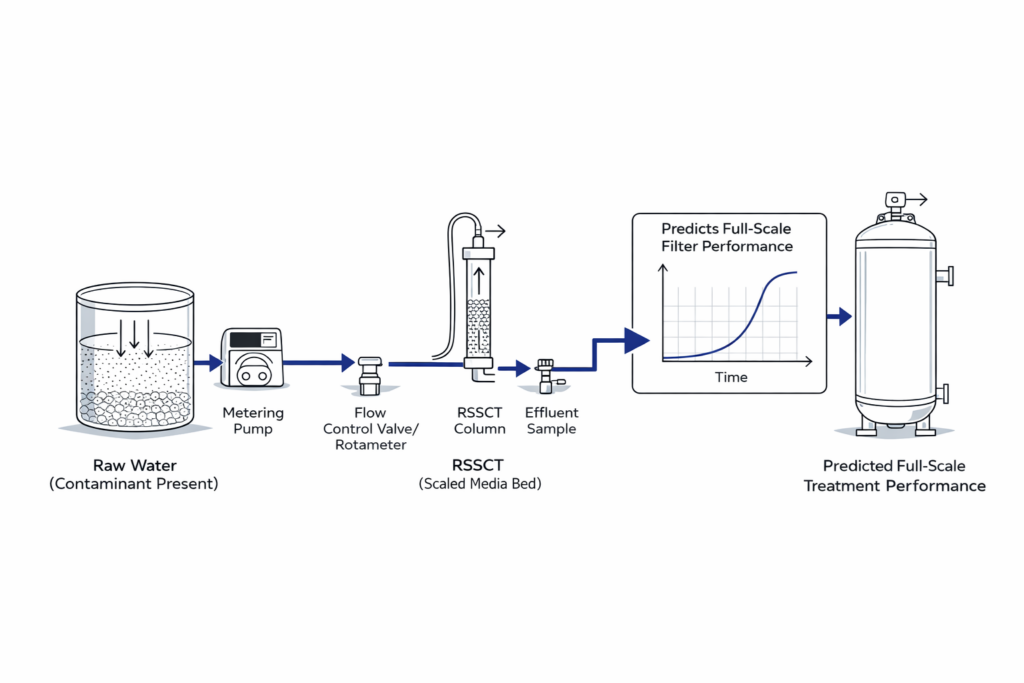
A typical RSSCT setup includes:
- A feed solution containing the contaminant of concern
- A metered flow system
- A small column packed with scaled filter media
- Sampling ports to monitor contaminant breakthrough over time
The test produces a breakthrough curve, showing how quickly contaminants begin to appear in the effluent as the media becomes exhausted.
From this data, engineers can accurately estimate:
- Expected media life
- Treatment capacity
- System sizing requirements
- Replacement intervals
- Overall treatment economics
The result is a reliable projection of how a full-scale treatment system will perform under real-world conditions.
Why RSSCT Is Getting So Much Attention?
RSSCT testing has become especially important as utilities face new and emerging water quality challenges.
In recent years, treatment design has become more complex due to:
- New federal PFAS regulations
- Stricter state limits on contaminants such as hexavalent chromium
- Increasing demand for cost-effective treatment technologies
- Greater scrutiny from regulators and consulting engineers
Utilities can no longer rely on generic media specifications alone. Regulators and engineers increasingly want site-specific validation that a treatment system will perform as expected.
RSSCT provides that validation.
By demonstrating treatment performance before system installation, RSSCT reduces uncertainty and allows utilities to make informed decisions about technology selection.
The Value of RSSCT in Groundwater Treatment Projects
For groundwater systems, RSSCT testing can be particularly valuable because water chemistry often varies widely from one well field to another.
RSSCT can help determine:
Media Selection
Different adsorption media perform differently depending on water chemistry. RSSCT identifies which media provides the best removal performance.
Media Life Prediction
Testing allows engineers to estimate how long media will last before replacement or regeneration is required.
Treatment Optimization
RSSCT data helps refine design parameters such as empty bed contact time (EBCT) and flow rate.
Cost Control
By predicting media performance in advance, utilities can avoid costly overdesign or premature media replacement.
In short, RSSCT testing helps ensure that treatment systems are both technically effective and economically practical.
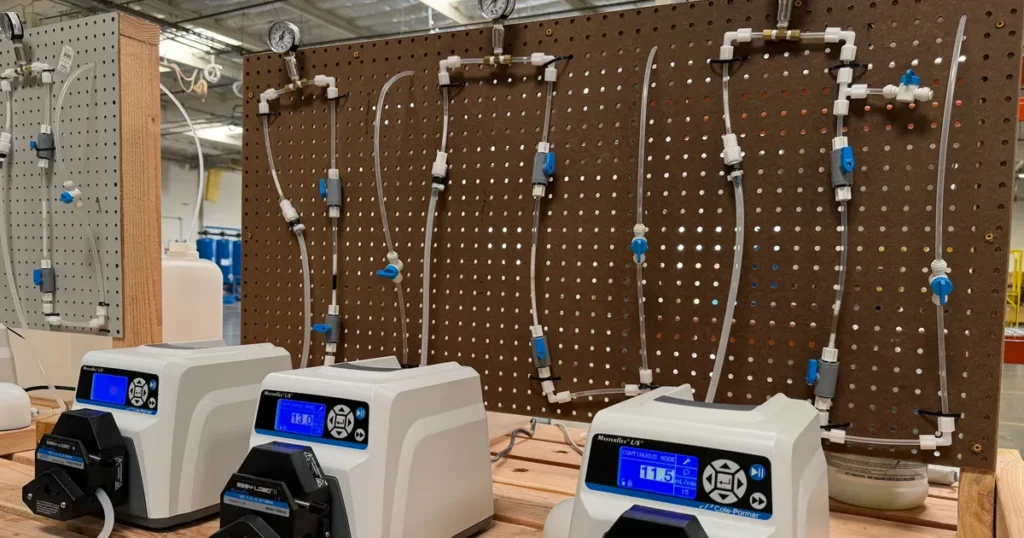
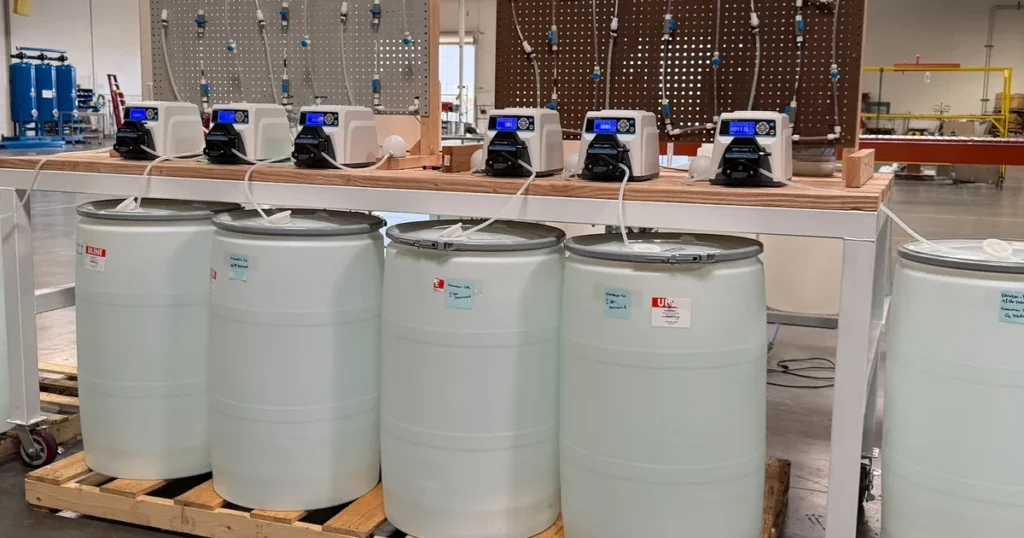
RSSCT setup at ATEC Water facility in California.
ATEC’s Approach to RSSCT Testing
ATEC Water Systems offers RSSCT testing as part of its comprehensive approach to groundwater treatment system design.
With more than 500 installations across North America, ATEC has extensive experience designing treatment systems for contaminants such as iron, manganese, arsenic, nitrates, PFAS, and hexavalent chromium.
ATEC’s testing capabilities allow utilities and consulting engineers to evaluate treatment media performance using water samples from their own systems.
This approach helps ensure that the final treatment design is based on real data from the specific groundwater source, not theoretical assumptions.
RSSCT testing can support:
- Media selection studies
- Design validation for new treatment plants
- Optimization of existing treatment systems
- Regulatory documentation for pilot validation
By combining laboratory testing with decades of field experience, ATEC helps utilities move forward with confidence.
From Laboratory Data to Full-Scale Treatment
The real power of RSSCT testing lies in its ability to connect laboratory results with full-scale system performance.
Once testing is complete, the breakthrough data can be used to predict:
- Full-scale filter bed performance
- Expected contaminant removal efficiency
- Media replacement intervals
- Long-term operating costs
These insights allow engineers to design systems that deliver reliable compliance while minimizing operational complexity.
ATEC integrates RSSCT findings directly into its system design process, ensuring that each treatment solution is tailored to the unique conditions of the water source.
Planning a Groundwater Treatment Project?
If your system is evaluating treatment options for contaminants such as PFAS, chromium, arsenic, nitrates, iron, or manganese, RSSCT testing can provide the data needed to support confident decision-making.
ATEC’s team can help evaluate your water chemistry, perform RSSCT testing, and design a treatment solution that meets regulatory requirements while delivering long-term operational reliability.
Contact ATEC today to discuss your groundwater treatment needs.